
The Anatomy of an engagement Status Report That Builds Executive Trust
Executives don’t ignore status reports by accident. They ignore bad ones on purpose. Good reports surface uncomfortable truths early and make it obvious where leadership attention is needed.

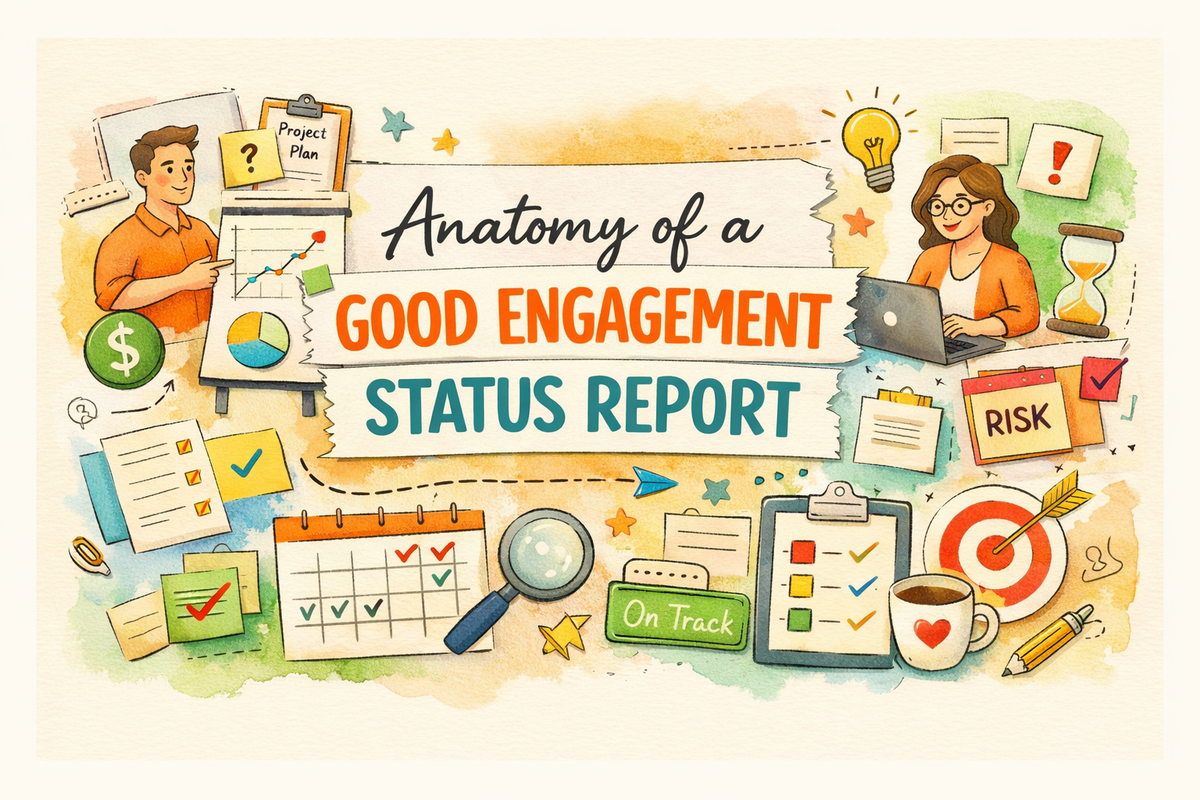
My experience is that good project status reports are valued. Bad ones are quickly buried on the scrap heap of information executives never asked for. If yours is not getting traction, it may fall into the latter category.
I believe a good status report is necessary for every engagement or project. It earns its keep by turning complexity into shared understanding, and shared understanding into decisions and action by project leaders. It also earns its keep by:
- Making your project easier to manage when it gets messy (which it inevitably will)
- Elevating the importance of your project and potentially protecting it when projects are reprioritised
- Progressively telling the story where you are on the map, how far you have travelled, what terrain is coming up and whether the path is still passable.
- Protecting you and your firm from misunderstandings by acting as a form of professional insurance when things get really messy. Believe me, the owners of your firm will appreciate the progressive story when this happens.
A status report doesn't have to be complex. It can be as unsophisticated as a short weekly email highlighting the key elements you would see in a visual report (see the image below). It can also be more sophisticated. What it should never be is just data. A good report always answers the what, the so what, and, where relevant, the now what.