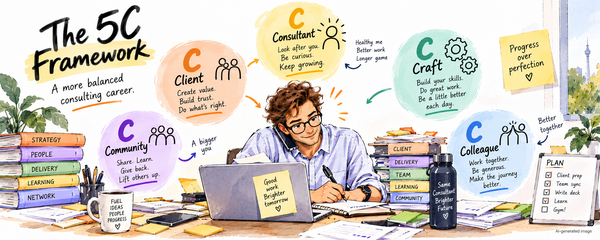
25 years of engagement starts condensed into one masterclass.
Turn the chaos of a new consulting engagement into clarity, confidence and client trust. Built on 25 years of experience, this practical playbook shows you how to prepare, set up and run engagements that uncover the next opportunity.

My Opa kept bees, and I loved watching him open up the hives, marvelling at the goings on inside. All those bees crawling over each other looked pretty random. What I’ve come to learn, now that I’m a beekeeper myself, is that every bee has a role and an evolutionary playbook for playing it, from nurse right through to defender of the hive.
So it is with consulting. It can look random and chaotic, particularly at the start of an engagement, when the client, the problem and the people are all new. After twenty-five years of starting engagements, I have learned to follow the same playbook every time.
I shared my 25 years of starting engagements at this month’s Café Shot Master Class.
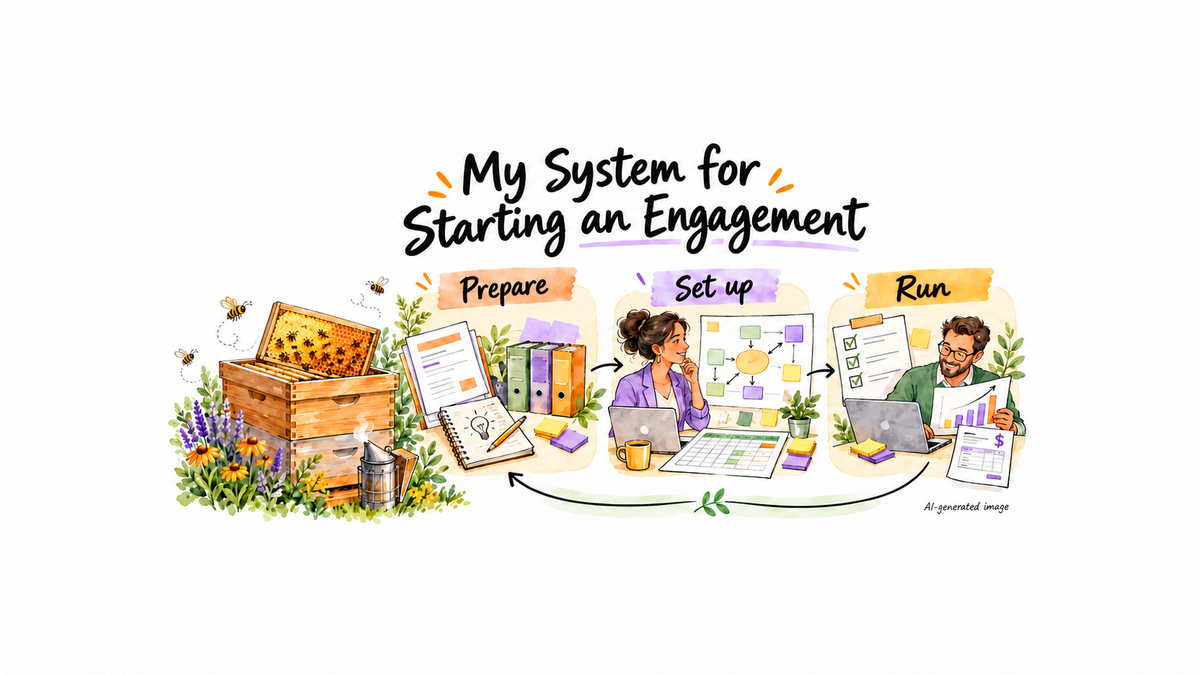
Here's the outline. It runs in three steps: Prepare, Set up and Run (consultants like phase names like this, don't they?). Here are a few insanely practical bits you can pinch.
- Prepare. I read the proposal and statement of work to see what was promised and which assumptions need testing. I set up five folders at minimum: Proposal, Research, Deliverables, Commercials and Project. And I start a think piece, a messy PowerPoint dumping ground for what I know, the questions I have and my first hypotheses.
- Set up. I draw a context diagram of the problem and everything around it, ask curious questions, and redraw it until the client adopts it as theirs. It becomes tab one of my engagement command centre, one spreadsheet with tabs for stakeholders, schedule, deliverables, doing and not doing, timesheets, commercials and burndown.
- Run. The status report comes straight off the deliverables tab, so the client always knows where the engagement is at. I track burndown, even on time and materials engagements. And I watch the invoices, because unpaid invoices are a trailing indicator that something is bothering the client, and aged debt is much harder to recover than a quick conversation.
Like any healthy hive, it feeds itself. Everything I learn in Run goes back into the think piece and the context diagram, so the picture crystallises with every cycle. I even track what I’m not doing, and that list becomes a plan the client can pick up themselves, or the next package of work they ask for.
Cafe Shot Master Classes
Café Shots run every month for paid ConsultantCafe members, who join live and get these articles every week. This month there’s a little extra honey: members can download my full slide deck from the session.
If you’re not a member yet, there’s room at the cafe for you. Here’s an offer to get you started.
Get it all. Your first month is on me.
Download my consulting IP, join a consultant masterclass (hundreds already attend each year), and get four weeks of insanely practical consulting insights straight to your inbox.