The Myth of Seniority that comes with title
The myth of seniority is that titles create authority and value. They don’t. Some of the best leadership on a consulting job can come from the most junior person on an engagement.

I read r/consulting and r/big4 pretty regularly, mostly to keep a pulse on what consultants are actually experiencing. One thing I see pop up a lot is the idea that getting more senior will automatically make the job feel better.
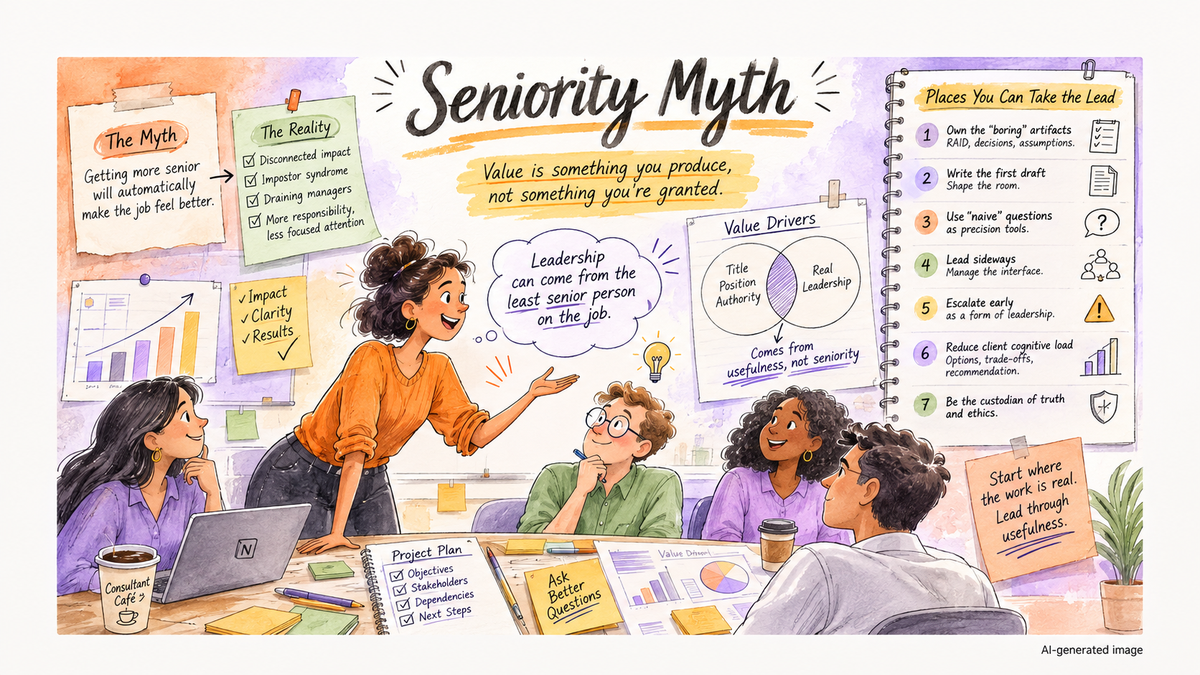
But plenty of threads tell a different story. Consultants describe feeling disconnected from the impact of their work, wrestling with impostor syndrome, and working with managers who slowly drain the life out of the job. Impostor syndrome is what happens when you believe value is granted rather than produced. Promotion doesn't cure it. Evidence does.
The myth of seniority says authority comes from titles or position in the organisation. In my experience, leadership in consulting can come from the least senior person on the job. In some ways, that’s what the most senior person should be creating space for.
Yes, someone senior by title, such as a Partner, often bears more risk. Their name sits closer to the contract. They are accountable for the relationship and the commercial outcome. But risk ownership is not the same as value creation.
If you’re junior by title, it can be easy to feel like you’re just along for the ride. But you’re often the one closest to what’s real. You’re closer to the work, closer to the details, closer to the client, and closer to what’s actually happening day to day. That means you can make an outsized difference.
There’s another truth that rarely gets discussed. The more senior someone is on the consulting totem pole, the more their attention gets split. A good senior cares about delivery, but they’re also managing utilisation, resourcing, margins, and what comes next. If you’re not as senior by title, you often have more uninterrupted attention for what’s actually happening in front of you. That’s not a small thing. That’s a leadership advantage.
A good senior will enable that leadership in you. They will delegate properly and give you space to shine. A weaker senior will hold onto the meaningful work because it feels safer or faster. When that happens, you still have a choice. You can stay small and wait for permission, or you can lead through the work that anchors the project in reality.
You also have an advantage with clients. Many clients are more open with someone less senior by title. It can feel safer to speak plainly. They explain more. They test ideas out loud. They admit what they do not understand. They sometimes tell you the thing they will never put on paper. If you’re paying attention, you can hear the real problem underneath the official one before anyone senior even knows it’s there.
This is where leadership starts. It starts with being useful in a way that reduces uncertainty for everyone else. It starts with asking simple questions that force clarity. What problem are we solving? What does success look like? Who signs this? What are we assuming? What dependency could break the critical path? These are not junior questions. These are consulting questions.
It is my view that a graduate can show true leadership where someone much more senior may not. If you are junior by title, don’t wait to feel ready. You are already allowed to lead in the places that make a project real. Start there. Earn trust by making truth easier to see. Be useful in a way that compounds.
Here are some places you can take the lead when you’re not the most senior by title.